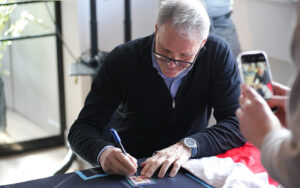
In 2006, a shy Argentine boy stepped into a conference room of a five-star hotel in Barcelona. His name was Lionel Messi, and it was the first time he was introduced to the idea of being paid to sign football shirts and other memorabilia.
Icons had spotted something special in the then eighteen-year-old prodigy. The sports memorabilia company – at the time still operating out of a basement in Camden, London – offered Messi an exclusive contract. Twenty years later, that exclusive partnership has once again been extended, this time for the long term.
It’s not about the partnership—it’s about authenticity
What caught my attention was not so much the renewal of the collaboration itself, but the announcement that came with it: the launch of a new authentication system. One that promises to address a problem the memorabilia world knows all too well – the overwhelming presence of forgeries in today’s market.
The most compelling feature of TripleLock™ is its approach to documentation. Every individual signed item is recorded with both photo and video at the moment of signing. This creates an exact match between the signature and its visual proof, making large-scale forgery virtually impossible.
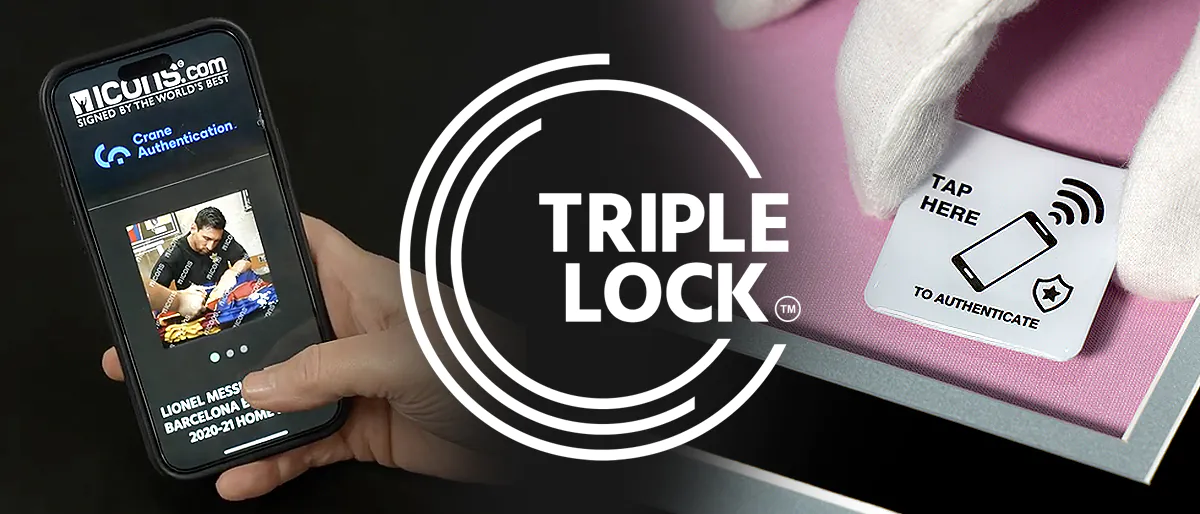
Each signed item is also fitted with an NFC tag, allowing collectors to verify authenticity online. In addition, a physical Certificate of Authenticity (COA) is supplied, complete with matching holograms.
A step forward for authenticity
Taken together, this represents a significant step forward in protecting the integrity of signed memorabilia. Whether Icons can successfully implement this system across its entire range of items remains to be seen.
What is certain, however, is this: from this point on, Messi’s signature is protected at a level the market has not seen before. But will it be enough? For now, only time can answer that question.